Why Container Mining Farms Are Revolutionizing Cryptocurrency Mining Efficiency
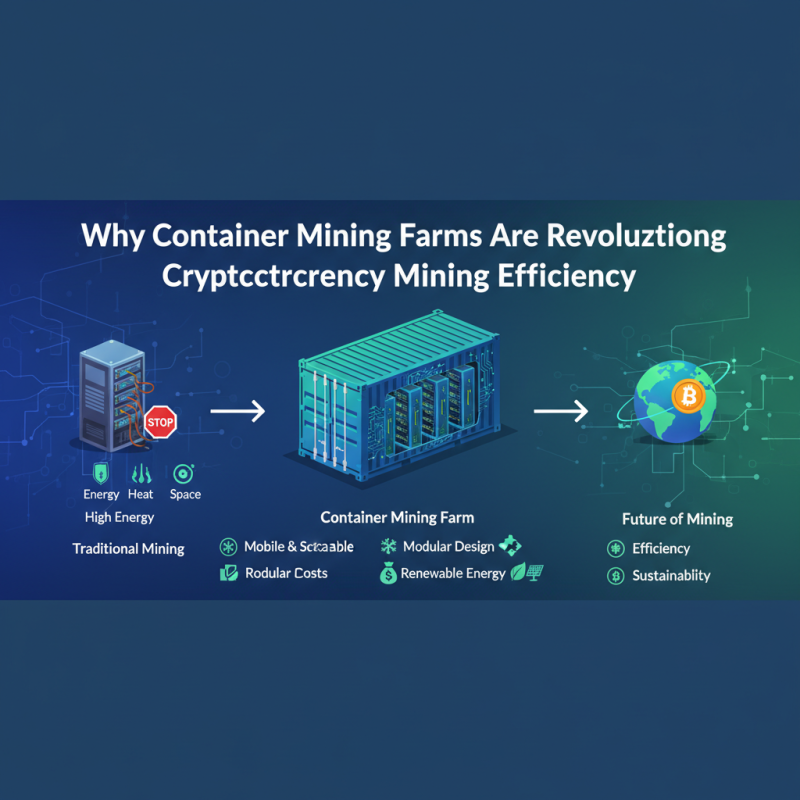
The evolution of cryptocurrency mining has been marked by a constant quest for improved efficiency and sustainability. As the demand for digital currencies surges, traditional mining methods face challenges such as high energy consumption, excessive heat generation, and the need for substantial physical space. This is where the concept of the Container Mining Farm emerges as a revolutionary solution. These innovative mining setups leverage standardized shipping containers to create mobile and scalable mining operations that can adapt to various environmental demands.
Container Mining Farms offer numerous advantages, including enhanced cooling systems and modular designs that allow for easy expansion and relocation. By decentralizing mining operations, they not only optimize resource usage but also reduce operational costs significantly. Furthermore, these farms can be strategically placed near renewable energy sources, promoting greener mining practices. As the cryptocurrency landscape continues to evolve, Container Mining Farms are poised to transform how mining is conducted, pushing the boundaries of efficiency and paving the way for a more sustainable future in the digital currency space.
Understanding Container Mining Farms and Their Role in Cryptocurrency
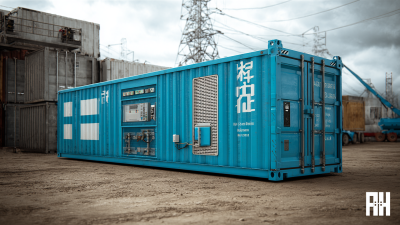
Container mining farms are appearing at the forefront of cryptocurrency mining, offering a new level of efficiency and flexibility. These innovative setups involve using standard shipping containers to house mining rigs, which not only allows for easy transportation but also facilitates rapid deployment in various locations. By utilizing containerized units, miners can quickly scale their operations in response to market demands while optimizing energy consumption and reducing overhead costs. This modular approach has become a game-changer, particularly in areas where electricity prices are favorable.
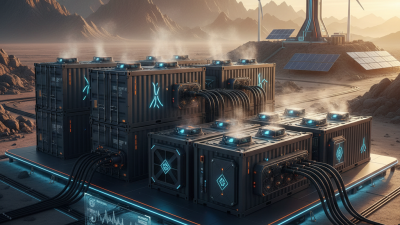
Tips for optimizing container mining farms include strategically locating the units near renewable energy sources, such as solar or wind farms, to minimize electricity expenses. Additionally, ensuring proper ventilation and cooling systems within these containers is vital to maintain operational efficiency and prolong the lifespan of mining equipment. Another practical tip is to implement remote monitoring tools that enable real-time performance tracking, which can significantly enhance the management and profitability of mining operations.
The role of container mining farms in cryptocurrency extends beyond mere efficiency; they embody a transformative shift towards sustainable practices in the industry. By allowing miners to operate in diverse environments and adapt to regulatory changes more swiftly, these farms pave the way for a more resilient and agile mining ecosystem. As the demand for cryptocurrencies continues to grow, container mining farms are likely to play a pivotal role in shaping its future.
The Technology Behind Container Mining Farms: Innovations and Features
Container mining farms are at the forefront of cryptocurrency mining efficiency, bringing a new level of innovation to the industry. These farms utilize modular containers as self-contained units equipped with advanced hardware, cooling systems, and energy management technologies. By maximizing space and optimizing power consumption, they enable miners to harness vast amounts of computational power without the constraints typically associated with traditional mining setups. The modular nature of container farms allows for rapid deployment and scalability, making it easier for operations to adapt to the fluctuating demands of the cryptocurrency market.
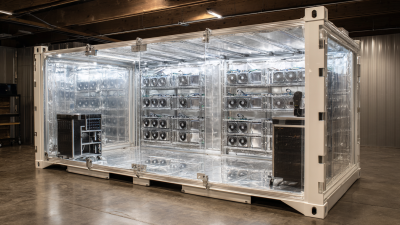
One of the standout features of container mining farms is their integrated cooling systems. Efficient temperature management is crucial in mining, where equipment operates continuously under significant loads. Many container designs leverage advanced cooling technologies, such as liquid cooling or air circulation systems, which not only prolong the lifespan of the mining rigs but also enhance performance. Additionally, these farms often incorporate renewable energy solutions, thus reducing overall energy costs and environmental impact.
Tips: When considering a container mining farm, focus on the scalability of the setup and the energy efficiency of cooling solutions. Research modular designs that fit your specific mining needs, as they can significantly affect overall performance and operational costs. Always keep an eye on the latest technological advancements in this rapidly evolving field to stay ahead in the game.
Benefits of Container Mining Farms: Efficiency, Scalability, and Flexibility
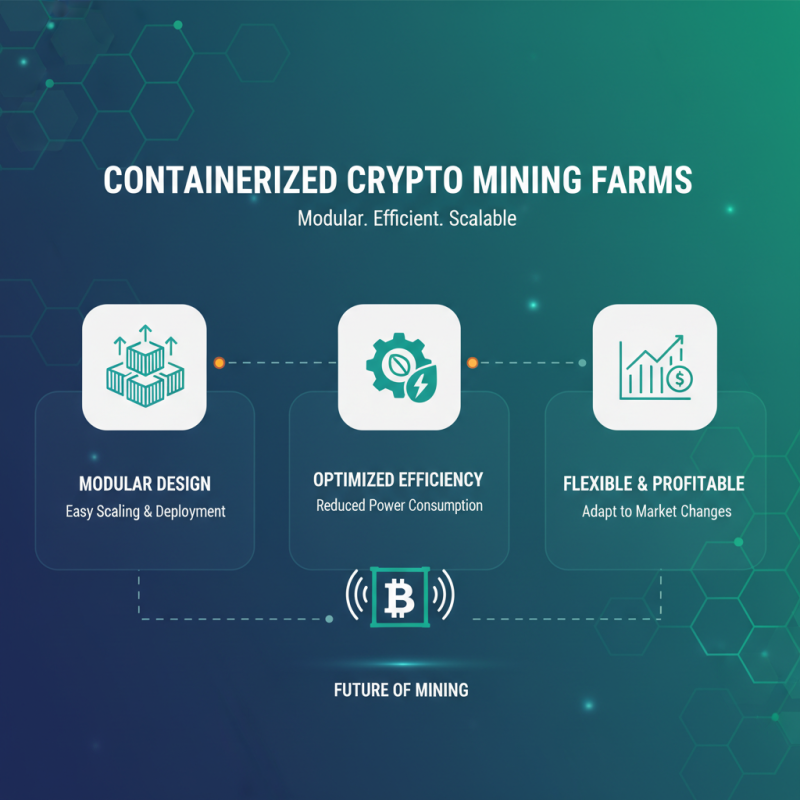
Container mining farms are transforming the landscape of cryptocurrency mining by offering significant advantages in efficiency, scalability, and flexibility. One of the primary benefits of these farms is their modular design, which allows operators to easily scale operations based on demand. Instead of investing in a large fixed facility, miners can deploy multiple container units, making it simpler to adjust mining capacity to match fluctuating market conditions. This adaptability not only conserves resources but also optimizes power consumption, ultimately enhancing overall operational efficiency.
Additionally, the flexibility of container mining farms makes them suitable for various environments, whether urban or remote. The containers can be transported and set up quickly, allowing miners to take advantage of localized benefits such as lower energy costs or cooler climates for efficient cooling. This mobility means that miners can strategically position their operations to maximize production while minimizing overhead.
**Tips:** When considering a container mining farm, assess local energy prices and climatic conditions to find the most cost-effective setup. Additionally, keep an eye on the latest technologies that can be integrated into container farms to improve efficiency further. Regular maintenance and upgrades can ensure optimal operation, making the most of your investment in this innovative mining solution.
Comparing Traditional Mining Operations to Container Mining Farms
Traditional cryptocurrency mining operations have long been characterized by
significant overhead costs
and inefficiencies. These setups often require expansive physical locations,
substantial energy consumption, and complex cooling systems to handle the heat
generated by mining rigs. Additionally, they can be slow to scale, necessitating
substantial upfront investments for hardware and infrastructure that may become
obsolete as technology evolves. These limitations not only hinder profitability
but also make it challenging for new entrants to compete in the cryptocurrency
space.
In contrast, container mining farms offer
a modern solution. These are prefabricated, mobile units equipped with the necessary
mining hardware, engineered for optimal performance and efficiency. The modular
design allows for rapid deployment and scaling, enabling miners to relocate
operations easily as market conditions change or energy costs fluctuate. Moreover,
these containers often feature advanced cooling systems and energy-efficient
technologies that significantly reduce power consumption, enhancing overall
profitability. By allowing miners to operate closer to energy sources, such as
renewable energy facilities, container farms also promote sustainability in the
mining industry.
Tip: When
considering a mining operation, evaluate the energy costs in your region—this
can drastically affect your bottom line. Investing in energy-efficient technologies,
like those used in container farms, can lead to substantial savings over time.
Additionally, analyzing market trends and adapting your operations to be flexible
can give you a competitive edge in this rapidly evolving industry.
Environmental Impact of Container Mining Farms and Sustainability Practices
The rise of container mining farms is not only transforming the efficiency of cryptocurrency mining but is also reshaping the environmental considerations of these operations. Traditional mining setups often suffer from high energy consumption and significant carbon footprints. However, container mining farms, utilizing modular and scalable designs, have become a solution to these issues. According to a report from the International Energy Agency, cryptocurrency mining consumes about 1% of the global electricity supply, which emphasizes the urgent need for innovative practices like those employed in container farms.
Container mining farms are designed with energy efficiency in mind, often equipped with advanced cooling systems and renewable energy options, such as solar or wind power. A study published in "Nature Communications" estimates that shifting to more sustainable practices in mining could reduce greenhouse gas emissions by up to 50%. This revolution in mining infrastructure not only lessens the environmental impact but also improves overall operational efficiency, allowing for a consistent power supply without overburdening local grids.
Tip: To maximize the sustainability of a mining operation, consider the location of your container farm. Areas with abundant renewable energy sources can significantly cut down on electricity costs and reduce reliance on fossil fuels.
In addition to energy efficiency, container mining farms also focus on minimizing waste through modularity. This approach allows for easy upgrades and repairs, reducing the need to dispose of obsolete equipment. Implementing practices like water cooling and heat reclamation further enhances their sustainability profile, demonstrating that a balance between profitability and environmental stewardship is achievable in the cryptocurrency industry.
Tip: Regularly review and update your equipment to ensure you’re using the most energy-efficient technology available, which not only optimizes performance but also lessens the environmental impact.