
7 Miner Power Buying Tips for Global Buyers?
Buying Miner Power across borders is not simply a price comparison. It is a technical sourcing decision involving voltage, efficiency, heat, noise, shipping, and after-sales support. A unit that performs well in a cool warehouse may struggle in a hot mining room with unstable electricity. Small specification gaps can become serious operating costs.
This guide presents seven practical buying tips for global buyers. It focuses on verified output ratings, energy efficiency, connector compatibility, cooling design, safety certifications, supplier reliability, and warranty terms. Request complete datasheets, test records, and clear photographs of labels before placing an order. Independent inspection can also confirm whether the delivered unit matches the quoted model. Details matter.
Regional requirements should not be treated as optional paperwork. Check input standards, plug types, customs documents, recycling obligations, and applicable electrical certifications before shipment. Experienced buyers still make mistakes, especially when a low price creates pressure to move quickly. I have seen buyers overlook cable quality or operating temperature, then discover unexpected downtime after installation. That lesson is uncomfortable, but useful. A careful comparison should include total ownership cost, not only the purchase price. Freight, replacement parts, energy consumption, and warranty handling may change the final decision. The best Miner Power choice is not always the cheapest one. It is the one that remains safe, compatible, and supportable in its actual operating environment.
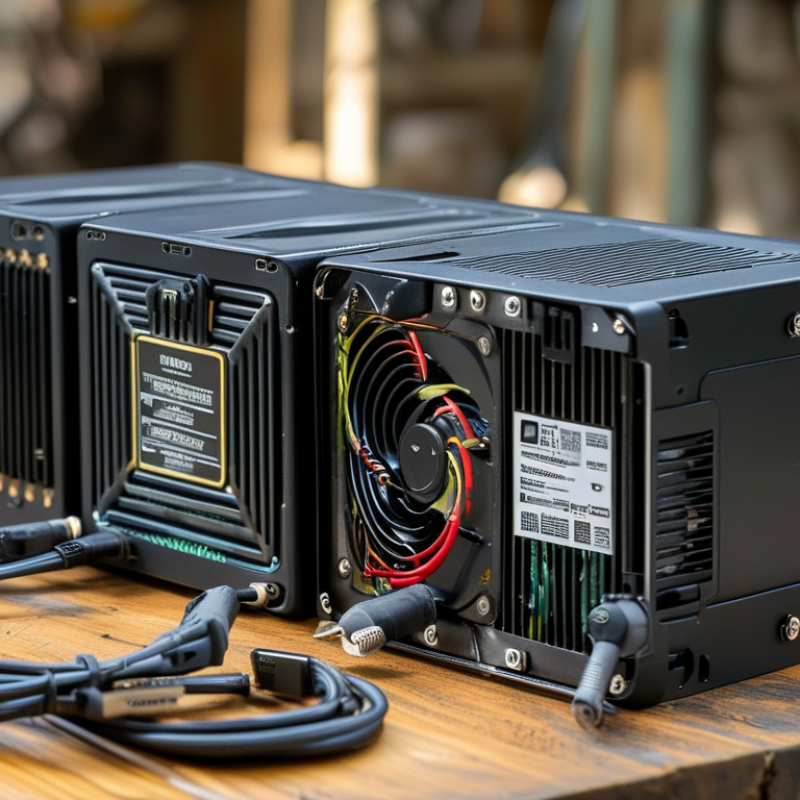
Assess Your Miner’s Power Requirements and Operating Conditions
Buying a miner globally starts with measuring real power demand, not trusting a headline wattage. Check the miner’s rated consumption, input voltage, frequency, and power supply efficiency. Measure usage at the wall with a calibrated meter. Include startup surges and a safety margin of at least 15 percent. A 3,000-watt unit can draw more than expected when room temperature rises. Confirm that the circuit, socket, and distribution equipment support continuous operation. Electricity costs should use actual local tariffs and taxes.
Tips: Record power readings during a full 24-hour test. Short tests can hide thermal throttling or unstable consumption. Also, calculate heat output. Nearly all electrical power becomes heat, so a 3,000-watt miner needs serious ventilation. I once underestimated airflow because the room felt cool at night. Daytime temperatures exposed the mistake.
Operating conditions matter as much as electrical capacity. Keep the intake area clean and provide a clear exhaust path. Dust, humidity, and poor airflow can reduce performance and shorten component life. Check the expected temperature range, altitude, noise level, and available cooling before purchase. Avoid placing several units in a small enclosed room. Use temperature monitoring and inspect cables for unusual warmth. A spreadsheet may look precise, yet its assumptions can be wrong. Recheck every figure against the actual installation site.
7 Miner Power Buying Tips for Global Buyers: Assess Your Miner’s Power Requirements and Operating Conditions
The figures below are general planning references for digital-asset mining hardware. Actual requirements vary by model, firmware, voltage, power supply efficiency, site conditions, and local electrical regulations. Always confirm the equipment datasheet and have the installation reviewed by a qualified electrician.
| # | Buying Tip | Key Metric to Check | Typical Planning Reference | Useful Calculation or Test | Operating Impact |
|---|---|---|---|---|---|
| 1 | Match the miner to the available power capacity | Rated input power and site capacity | Many current air-cooled ASIC miners require approximately 2,500–4,000 W per unit. Confirm the continuous capacity of the circuit, distribution board, and facility before purchasing. |
Total miner load = Unit wattage × Number of miners Add cooling, networking, lighting, and other auxiliary loads separately. |
Insufficient capacity can cause breaker trips, voltage drop, overheating, or forced shutdowns. |
| 2 | Verify voltage, phase, and frequency compatibility | Input voltage, phase, frequency, and plug type | High-power mining equipment commonly uses 200–240 V AC. Some installations use single-phase power, while larger facilities may use three-phase distribution. Frequency is commonly 50 or 60 Hz, depending on the electrical grid. | Check the miner nameplate, power-supply label, receptacle rating, and local utility specification. Do not rely only on a plug adapter. | Incorrect voltage or phase may prevent startup, reduce stability, damage equipment, or create an electrical safety hazard. |
| 3 | Calculate current instead of judging by wattage alone | Continuous operating current | At 230 V, a 3,000 W miner draws approximately 13.0 A before considering power factor and measurement variation. A 3,500 W miner draws approximately 15.2 A. |
Current (A) ≈ Power (W) ÷ Voltage (V) For real installations, also consider power factor, startup behavior, conductor rating, and ambient temperature. |
Current determines conductor sizing, breaker selection, receptacle limits, and heat generated in the electrical system. |
| 4 | Use a safe continuous-load margin | Electrical utilization and reserve capacity | A common design practice is to keep a continuous load at or below approximately 80% of a circuit’s rated capacity, where required or recommended by local electrical codes. |
Recommended design load = Circuit rating × 0.80 Example: a 20 A circuit provides about 16 A for a continuous planning load. |
Reserve capacity helps absorb measurement variation, voltage changes, auxiliary loads, and future expansion. |
| 5 | Budget for heat removal and ventilation | Heat output and cooling capacity | Nearly all electrical power consumed by an air-cooled miner becomes heat. A 3,000 W miner releases about 10,236 BTU/h of heat. |
Heat output (BTU/h) ≈ Power (W) × 3.412 Cooling design must also include outdoor temperature, solar gain, building losses, and other equipment. |
Poor heat removal raises component temperatures, increases fan speed, reduces efficiency, and may cause thermal throttling. |
| 6 | Assess the operating environment before purchase | Ambient temperature, humidity, dust, and airflow | Use the manufacturer’s specified operating range. As a general planning target for air-cooled equipment, maintain a clean, dry environment with stable airflow and avoid placing equipment in direct sunlight or areas exposed to conductive dust. | Measure inlet and outlet temperatures during the hottest expected operating period. Keep intake and exhaust paths separated to prevent recirculation. | High temperature, moisture, and dust can shorten fan and power-supply life and increase maintenance frequency. |
| 7 | Measure real consumption and plan for expansion | Power measurement, efficiency, and scalability | Compare the datasheet value with measured wall-side consumption. Include power-supply losses, network equipment, ventilation, and cooling systems. A site should retain practical spare capacity for maintenance and additional units. |
Energy use per day (kWh) = Power (kW) × 24 hours Example: a 3.0 kW miner uses about 72 kWh per day when operating continuously. |
Accurate measurements improve electricity-cost forecasts, prevent overloaded infrastructure, and support reliable long-term scaling. |
Related Posts
-
Revolutionizing Cryptocurrency Mining with Best Crypto Asic Miner and Its Industry Challenges
-

Ultimate Guide to Selecting the Best Crypto Mining Asic Hardware for Maximum Profitability
-
Exploring the Advantages of Cryptocurrency Mining Containers for Optimal Efficiency
-
2026 How to Choose the Best Asic Mining Rig for Maximum Profit?
-
The Future of Sustainable Bitcoin Mining Containers and Their Impact on Green Energy
-
Top 10 Container Mining Farm Options for Global Buyers?